

The Bottletree Blog
My Cat’s Eyes Are Watering, What Does This Mean?
Many cat owners notice watery eyes and feel unsure about what it means or how serious it might be. If your cat’s eyes are watering, it usually means there is irritation, inflammation, or an underlying eye or health issue that needs attention. Causes range from mild conditions, like allergies, to more serious concerns, such as infection or injury, which is why ongoing or sudden eye watering should never be ignored. Below, we explain the most common reasons cat’s eyes are watering, what signs to watch for, and when it is time to schedule a veterinary visit.
Why Are My Cat’s Eyes Watering All of a Sudden?
When a cat’s eyes are watering, it often signals that the eye is reacting to irritation or disease. Some causes are minor, while others can progress without treatment. Common causes include allergies, infections, blocked tear ducts, eye injuries, genetic traits, foreign material in the eye, and conjunctivitis.
Allergies in Cats
Allergies are one of the most frequent reasons a cat’s eyes are watering. Environmental allergens, food sensitivities, or seasonal changes can trigger inflammation around the eyes. Cats with allergies may also show:
- Sneezing or coughing
- Itchy skin around the face or ears
- Excessive grooming
- Patchy hair loss
- Red or irritated skin
- Recurrent ear issues
Allergic symptoms often worsen over time if not addressed. Your veterinarian can help identify triggers and recommend appropriate treatment.

Upper Respiratory Infections
Upper respiratory infections commonly affect cats and often involve the eyes. When infection is present, a cat’s eyes may water due to inflammation and discharge. Additional signs may include:
- Fever
- Low energy
- Decreased appetite
- Sneezing or coughing
- Nasal discharge
- Red or swollen eyes
- Eye discharge that may thicken over time
These infections can spread between cats, making early diagnosis and treatment important, especially in multi-cat households.
Blocked Tear Ducts
Tear ducts help drain fluid away from the eye. When they become blocked, a cat’s eyes are watering because tears cannot drain properly. Other signs may include:
- Red or irritated eyes
- Crusty discharge near the eyes
- Swollen eyelids
- Frequent blinking
- Pawing or rubbing at the face
Blocked tear ducts can worsen if left untreated and may eventually affect vision.
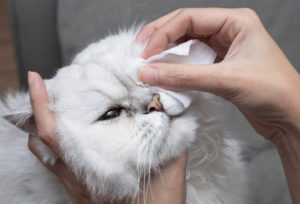
Eye Injuries
Scratches, trauma, or irritation can cause immediate eye watering. If a cat’s eyes are watering after rough play or outdoor activity, injury is a possibility. Signs of injury may include:
- Redness or swelling
- Sensitivity to light
- Squinting
- Visible blood or cloudiness
Eye injuries require prompt veterinary care to reduce the risk of permanent damage.
Genetic and Breed-Related Conditions
Some cats are more prone to watery eyes due to facial structure or inherited eye conditions. Flat-faced breeds, such as Persians, often experience tear overflow, which explains why a cat’s eyes are watering more frequently in these breeds. Even when watery eyes appear routine, regular veterinary checks help ensure no secondary issues are developing.
Foreign Objects in the Eye
Dust, debris, or plant material can easily enter a cat’s eye. When this happens, a cat’s eyes water as a natural response to flush out the irritant. Foreign material may not always be visible. Veterinary removal is safest, as attempting to remove it at home can worsen irritation or cause injury.
Conjunctivitis (Pink Eye)
Conjunctivitis is inflammation of the tissue surrounding the eye and is a common reason cat’s eyes are watering. It can be viral or bacterial and may occur alone or alongside other infections. Common signs include:
- Red, swollen eyes
- Excessive blinking or squinting
- Discharge that may be clear or thick
- Rubbing at the eyes
- Swelling that interferes with opening the eye
Conjunctivitis can spread between cats, making prompt treatment important.
Should I Be Worried If My Cat’s Eyes Are Watering?
It is normal to feel concerned when your cat’s eyes are watering, especially if the issue appears suddenly or worsens. While not every case is urgent, watery eyes often point to an underlying condition that benefits from veterinary evaluation. Early care can prevent discomfort and more serious complications.
What Should I Do If My Cat’s Eyes Are Watering?
A veterinary exam is the most effective way to determine why a cat’s eyes are watering and how to address the cause safely. Because eye issues can look similar on the surface, diagnosis matters. If you have concerns about your cat’s eye health, contact Bottletree Animal Hospital at (662) 234-4336 to schedule an appointment. Our team is here to help keep your cat comfortable and healthy.
Frequently Asked Questions About Watery Eyes in Cats
Can watery eyes in cats come and go?
Yes. Some cats experience intermittent eye watering, especially with seasonal changes or mild irritants. Ongoing or frequent episodes should be evaluated.
Is clear eye discharge normal in cats?
Occasional clear tearing can be normal, but persistent discharge or changes in color or thickness are not.
Do indoor cats get eye infections?
Indoor cats can still develop eye infections from stress, underlying illness, or exposure to other pets.
Can stress cause watery eyes in cats?
Stress can weaken the immune system, making cats more susceptible to infections that affect the eyes.
Are watery eyes more common in kittens or older cats?
Both age groups can experience watery eyes, but kittens are more prone to infections, while older cats may have chronic or age-related conditions.
Recent Posts
About Us
Welcome to Bottletree Animal Hospital, your family-friendly veterinarian in Oxford. We are a team of animal lovers who are passionate about veterinary excellence. We love working closely with you and your pet to help us learn more about your furry friend, their lifestyle, and their needs.